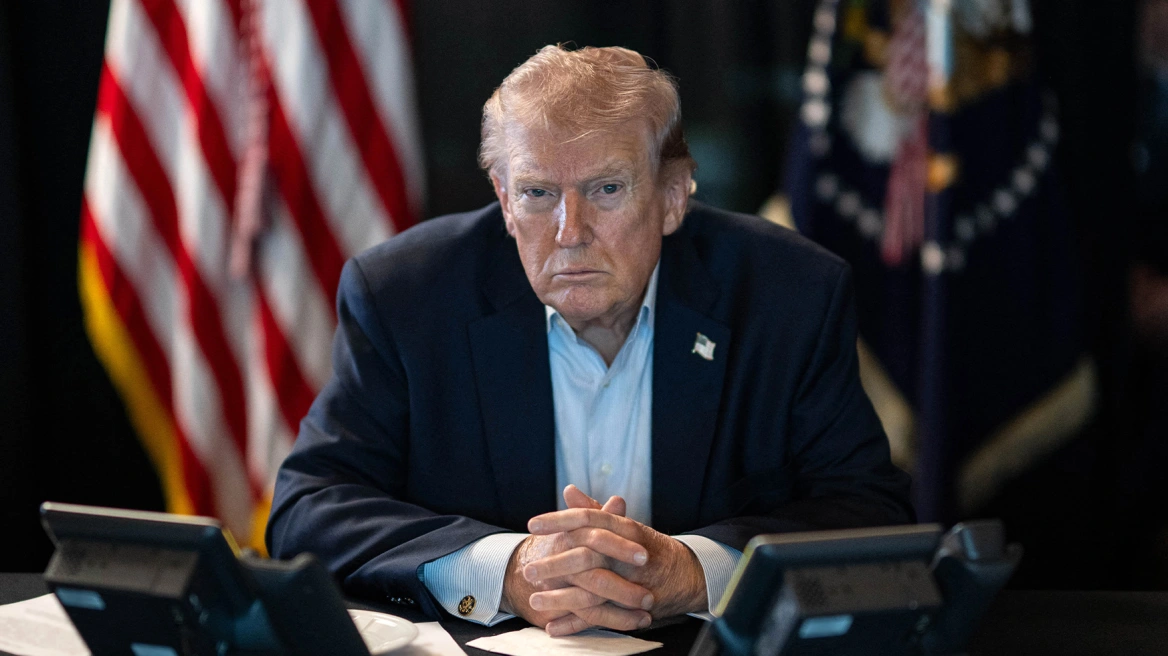
The possibility left open by Donald Trump of mobilizing American troops in Iran—raising concerns about a large-scale conflict—appeared to downplay a long-standing political taboo.
"As every president says, 'there will be no troops on the ground.' I'm not saying that," the American president remarked while attacks on Iran were ongoing.
Although political rhetoric from Washington suggests that a broader conflict is on the table, military analysts argue that the realities of Iranian territory would not allow for a traditional invasion.
"Boots on the Ground" or "Selective" Operations?
Strategic analyst Colonel Nidal Abu Zeid told Al Jazeera that it is unlikely the U.S. is considering a conventional ground assault with tanks and mass infantry, but rather a different form of warfare.
According to Abu Zeid, statements by Trump and Defense Secretary Pete Hegseth ("you don't need to move 200,000 people there and stay for 20 years") reflect what is militarily referred to as "selective" or "pick-up" operations. These involve limited actions by special forces infiltrating specific points to carry out precise sabotage or intelligence-gathering missions, followed by rapid withdrawal.
A traditional invasion aimed at occupying territory is not feasible, Abu Zeid stressed, citing Iran's complex geopolitical environment, difficult terrain, and dense population, all of which give Tehran a clear defensive advantage. He also noted that Israel has previously stated that a ground operation in Iran is unworkable.
In this context, a recent report by The Wall Street Journal revealed a scenario involving arming and activating minorities within Iran to strike the regime in various ways.
The Nuclear Pretext and the Shifting Timeline
Trump disclosed that the decision for a joint U.S.–Israeli operation followed the failure of "final talks" in Geneva. He claimed the reason was intelligence indicating that Iran had secretly moved its nuclear program to "an entirely different location."
The president argued that the operation is "well ahead of schedule." Initially estimating the war would last about four weeks, he later stated that the main objective—eliminating Iran's leadership, including the assassination of 49 top officials—was achieved in a single day.
The Missile War and Naval Propaganda
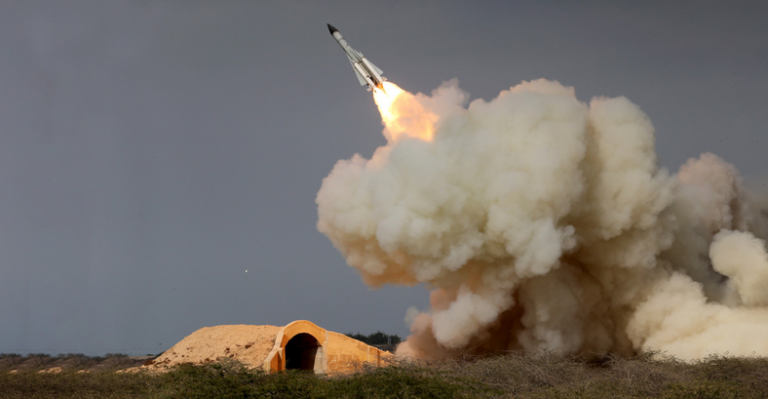
Although Iran's command structure has reportedly suffered severe blows, Tehran continued to respond. At least six American service members have been killed during the conflict, according to the U.S. military.
Meanwhile, Iran's Revolutionary Guards claimed they launched four cruise missiles at the aircraft carrier USS Abraham Lincoln, which is positioned near Iranian waters. Abu Zeid described the claim as propaganda, designed to undermine the morale and prestige of the U.S. military.
Domestic Backlash and Political Pressure
Despite the military momentum, Trump faces skepticism at home. A Reuters/Ipsos poll showed that only 27% of Americans approve of the strikes, while another poll by CNN/SSRS placed approval at 41%.
Trump dismissed the figures, arguing that a "silent majority" supports preemptive action to prevent "crazy people" from acquiring nuclear weapons. At the same time, Abu Zeid noted that U.S. and Israeli intelligence may have underestimated Iran's ability to quickly repair its command chain.
The Future of the Conflict
Iran's strategy of a "flood of fire" in all directions remains the key question, as Trump continues to boast that the objective of decapitating the leadership was achieved in just one day.
Time is counting down for both sides, and the next phase of this war may not be decided by U.S. forces on Iranian soil, but by which side exhausts its time and missile launchers first.
Πηγή: en.protothema.gr